Open any portal and Littleton looks like one market. A median around $620,000 to $635,000, roughly flat year over year, in a metro where inventory sits near a ten-year high. That single number is the story most buyers arrive with.
It is also wrong in the way that costs people real money. Zoom in one level, and Littleton has quietly split into two markets running in opposite directions at the same time.
The number the portals give you, and the numbers underneath it
Citywide, Littleton looks calm. Redfin data for the three months ending May 2026 puts the median sale price at $629,000, down 0.93% year over year, with homes going under contract in about 18 days. Houzeo's January 2026 snapshot showed a similar $621,600 median, a 98.26% sale-to-list ratio, and 1.23 months of supply. Resideline's July 2026 read tracks 55 active listings against 26 pending, a pending-to-active ratio of 0.47, with a six-month median closed price of $635,000 and the middle half of sales landing between $485,000 and $820,000.
Now look at the submarkets inside that same city.
| Submarket | Median sale price | YoY change |
|---|---|---|
| Historic Downtown Littleton | $725,000 | +20.8% |
| Ketring Park | ~$660,000 | +12.4% |
| Ken Caryl (80127) | $707,000 | +9.6% |
| ZIP 80123 | — | +5.2% |
| City of Littleton | ~$600,000–$635,000 | ~ -1.3% |
Neighborhood-level figures are drawn from a mid-2026 analysis of Redfin MLS transaction data covering the trailing twelve months. The gap between a citywide "flat to slightly down" print and four submarkets running between +5% and +21% is not a rounding error. It is the actual market, hidden by the average.
Why Historic Downtown pulled away
The blocks around Main Street are the tightest supply story in the city. Walkable retail, the RTD Littleton–Downtown light rail station, and a stock of older homes with real character mean that when a listing hits, competition concentrates fast. Made Magazine's mid-2026 recap of Littleton flagged Historic Downtown as the clearest example of a submarket where schools, walkability, and access to local amenities have pushed premiums well above the citywide average. City officials have been discussing zoning reforms that would allow duplexes and multiplexes on lots currently limited to single-family use, which tells you how much of the downtown price pressure is being read locally as a supply problem, not a demand bubble.
For a move-up buyer, the practical read is this: a $725,000 median in Historic Downtown is not the same purchase as a $725,000 home a few miles away. You are buying scarcity and location, and you are competing against buyers who have already accepted that.
Ken Caryl is a low-inventory story, not a hot-market story
Ken Caryl (80127) climbed 9.6% year over year to a $707,000 median while the citywide number fell. The mechanism is boring and important: not many homes list here, and when they do, the buyer pool for larger lots, trail access, and Ranch House pools and tennis courts absorbs them quickly. The current active listings on the west side of Littleton reflect this. Homes marketed with cul-de-sac positions near greenbelt access, or with six-figure documented upgrades, are pricing accordingly.
This matters for offer strategy. A neighborhood posting near double-digit gains in a flat metro is not one where you win by starting low and hoping. It is one where you win by being ready before the listing goes live.
Ketring Park, and the "patient buyer" pattern
Ketring Park is the interesting outlier. Prices climbed roughly 12.4% year over year, yet the median days on market ran around 41 days, well above the citywide 18. That combination usually indicates a submarket where buyers are willing to wait for the specific house, not the next available one.
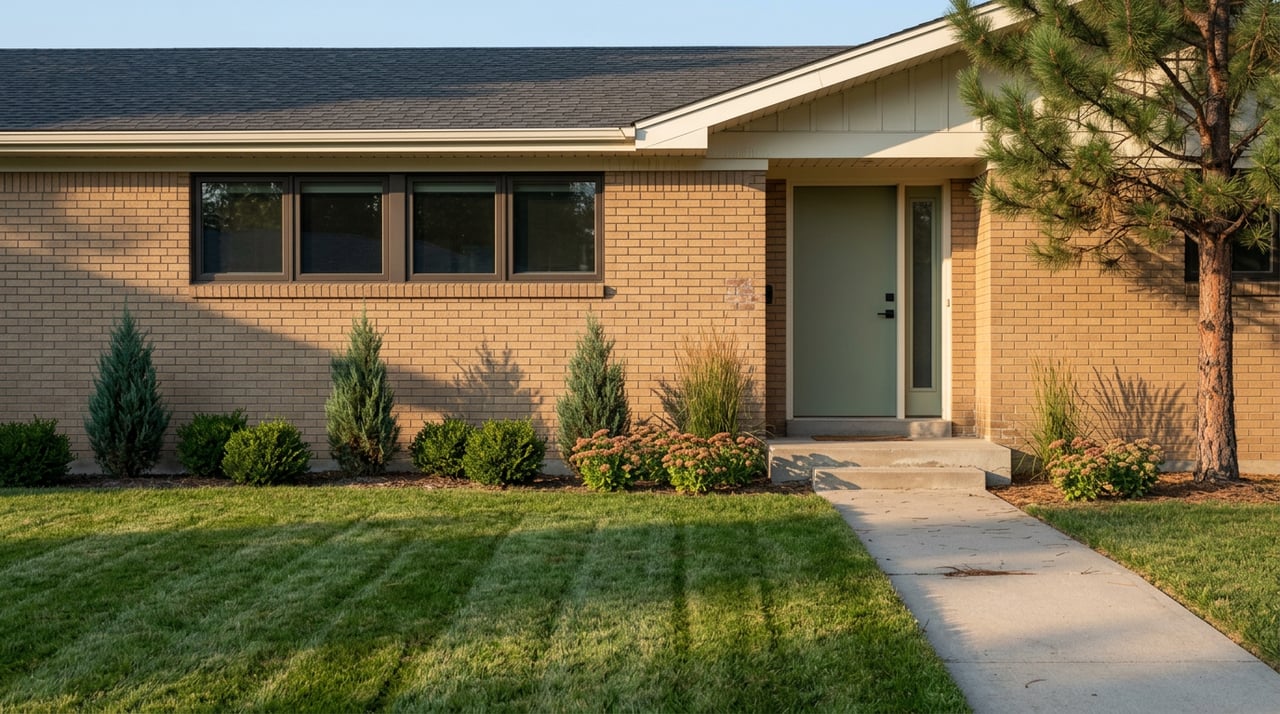
The draws are legible on a walk through the area. Ketring Park itself covers 55 acres of open fields and trails, with 12-acre Ketring Lake (Gallup Reservoir) and the Littleton Museum on site. Main Street sits about two miles away. Housing stock skews to mid-century ranches and split levels on generous lots, with prices ranging from roughly $500,000 into the low seven figures. If you are shopping here, the timeline lesson is the opposite of Ken Caryl. Patience is priced in. Sellers know their buyer will show up eventually.
The second split: condition has become its own market
The submarket axis is only half the story. The other axis is condition, and this is where the June 2026 DMAR data changes how a Littleton offer should be written.
Denver-metro detached median days on market jumped 27.27% from May to June 2026, rising to 14 days. Attached homes went to 34 days. The close-price-to-list-price ratio stayed near 99%, and the detached metro median was $675,000, up 1.5% year over year. Year-to-date new listings are down 5.55% across the metro. Inventory is high, absorption is slower, and yet the homes that show well are still trading close to ask.
DMAR's committee described what is happening in showings: buyers running their fingers along windowsills, checking the age of the water heater, and asking pointed questions about the roof before they get to the kitchen. Amanda Snitker, chair of the DMAR Market Trends Committee, called it a "turnkey premium" that is reshaping how both sides think about value.
Appreciation is no longer doing the heavy lifting for sellers. Condition is. The gap between a well-maintained Littleton home and one carrying deferred maintenance is now wider than the gap between two neighborhoods.
For a buyer in Littleton, this is the single most important shift to internalize. Two homes on the same street, at the same list price, are no longer comparable if one has a ten-year-old roof and one does not. For a seller, the same math cuts the other way. A pre-list punch of roof, HVAC, water heater, and paint is now doing work that a rising tide used to do for free.
What this means when you write an offer
The mid-market Littleton buyer is now solving a two-variable problem, not a one-variable one.
- Comp against closings, not asks. Resideline tracked 1,267 closings in Littleton over the trailing six months as of July 2026, with a median of $635,000 and the middle half between $485,000 and $820,000. The median asking price of the 55 currently active listings was $595,000. The active mix is different from the sold mix. Pricing off list price alone will get a buyer to the wrong number.
- Match your timeline to the submarket. Historic Downtown and Ken Caryl reward speed and a clean offer. Ketring Park, at 41 median days, rewards patience and precision on the property itself.
- Read the condition line before the price line. With the metro's close-to-list still near 99%, the seller is generally not the one giving ground on price. They are giving ground on concessions for repairs, rate buydowns, and inspection items. That is where the money now lives.
- Watch back-to-school timing. The DMAR June 2026 report noted activity was expected to re-engage in July as families targeted closings before the mid-August school start. In Littleton, that pull-forward tends to hit the 80127 and 80123 corridors first.
None of this is visible from a portal median. All of it changes what a $700,000 offer in Ken Caryl or a $725,000 offer downtown should look like when it lands on a listing agent's desk.
Common questions
If the citywide median is flat, why are individual neighborhoods up double digits? Because a median is only as honest as the mix of homes that traded. Historic Downtown, Ken Caryl, and Ketring Park each closed enough sales in the trailing twelve months to move their own line, while different mixes in other parts of the city pulled the aggregate the other way.
Is this a sign of a bubble in the strong submarkets? The DMAR data suggests the opposite. Metro appreciation has flattened, close-to-list is holding near 99%, and inventory is near a decade high. What is showing up in Historic Downtown and Ken Caryl looks like scarcity pricing in specific pockets, not broad speculative pressure.
Where does the "turnkey premium" hit hardest in Littleton? On older housing stock, which is a large share of Ketring Park and the blocks around Main Street. Homes built in the late 1950s and 1960s carry mechanical systems that today's buyers are inspecting harder than they did two years ago. A documented roof, water heater, and furnace history is now part of the price.
Working the two-market read into a real transaction
The buyers and sellers who do well in Littleton over the next two quarters will be the ones who stop treating the city as one market. The submarket you choose and the condition of the home you buy or sell now matter more than the ZIP-code median a portal will hand you on the first click.
That is the work we do every day at DeLUX Team. We price against actual closings, prepare listings to earn the turnkey premium rather than fight it, and match buyer timing to the specific submarket instead of the citywide headline. If you are weighing a move in or out of Littleton this fall, request a free home consultation and we will walk your specific block, your specific price band, and your specific timeline together.